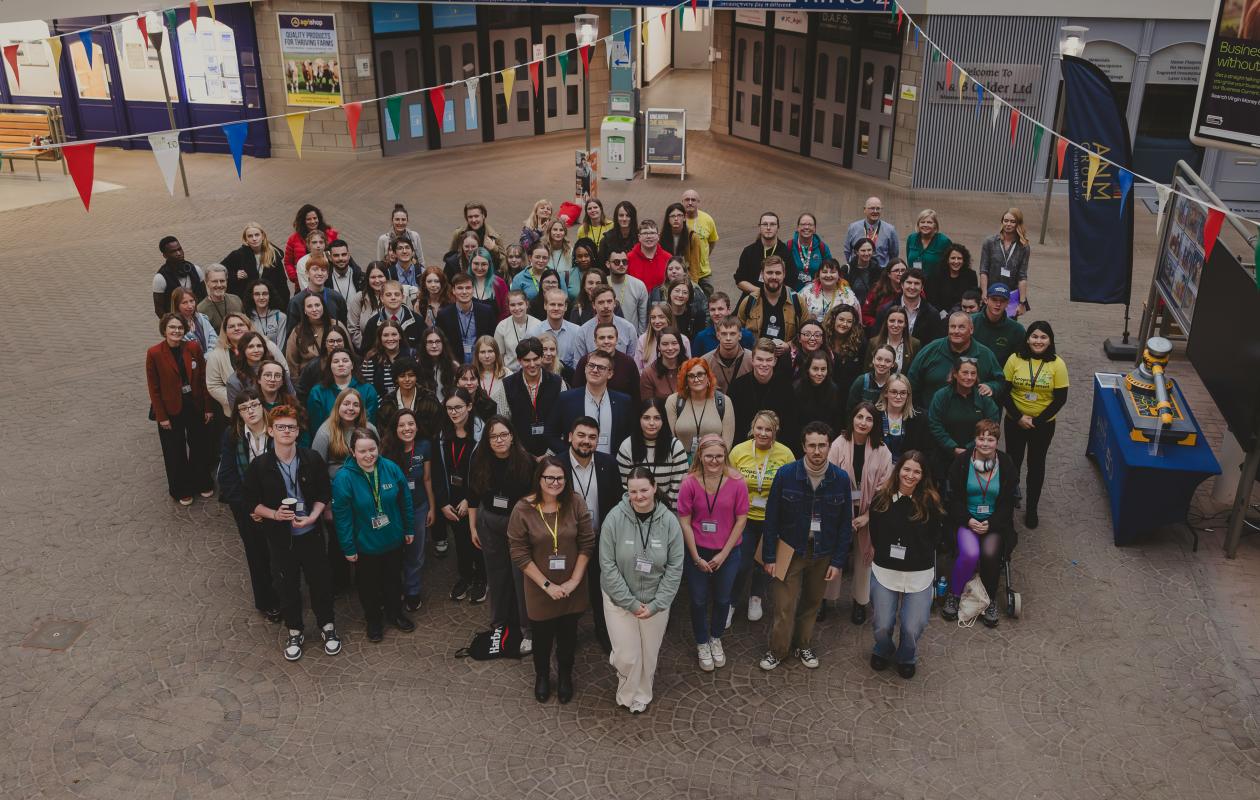
On June the 23rd 2026 the ERP held a special event in Brussels to celebrate and follow up the 6th European Rural Parliament – “Strength from opportunity – rural community solutions to global challenges”
The summary of the event is below. At the bottom you will find PDFs of the presentations. You can find the videos of the meeting here.

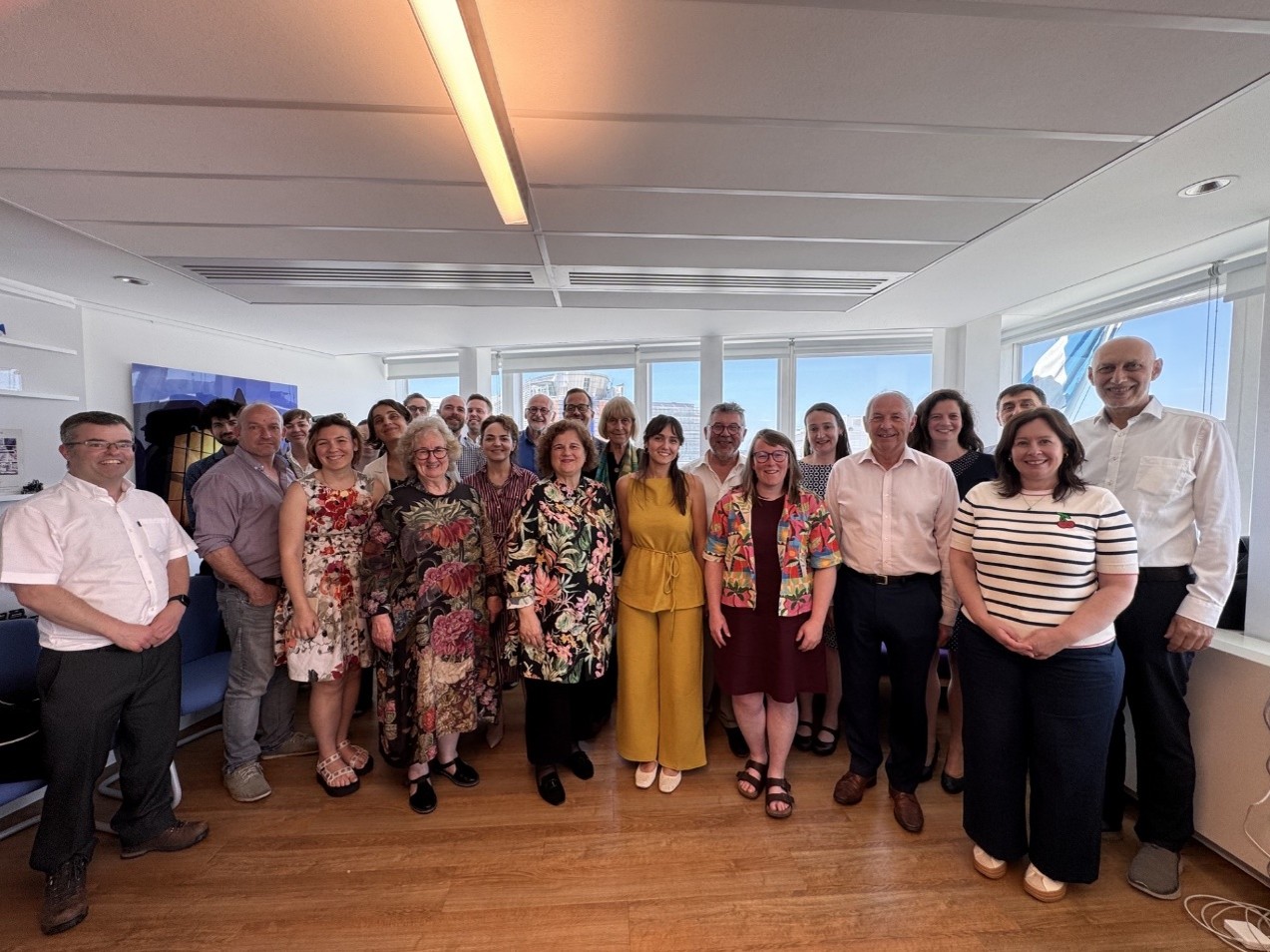
Summary of the ERP-Follow-Up meeting: Putting rural civil society in position
June 23 Scotland House Robert Schumanplein 6, 1040 Brussels
The meeting brought together representatives from governments, rural movements, EU institutions, and civil society to reflect on the outcomes of the 6th European Rural Parliament (ERP) and to discuss how rural voices can influence the upcoming EU Multiannual Financial Framework (MFF).
1. INTRODUCTION RURAL COMMUNITIES AS SOLUTIONS TO EUROPE’S CHALLENGES
After the opening words by Tom Jones, also setting the scene, Brian Grogans – Head of the Rural Policy Unit in the Scottish Government welcomed the guests in Scotland House. Brian and Theona Morrison (Scottish Rural Action) emphasised:
- The importance of rural identity, culture, and languages (Gaelic, Welsh, etc.).
- Rural areas hold key assets for climate action, biodiversity, food security, and resilience.
- The ERP Inverurie-Declaration stresses “treasuring cultural traditions while driving innovation for a fairer and greener Europe.”
- Communities need recognition, parity of esteem, and long‑term investment—not charity.
“Rural places are not so much needing help. They’re needing recognised and supported.”
Goran Šoster outlined the ERP’s Structure, Role and architecture:
- Four founding partners (ERCA, PREPARE, ELARD, Rural Youth Europe).
- Nearly 20 national rural parliaments.
- ERP acts as a bridge between local communities and EU institutions, but needs stronger continuity between events.
2. RURAL IN THE EU POLICY PROCESSES
EU Long‑Term Vision for Rural Areas (LTVRA) & Rural Pact
Alexia Rouby (DG AGRI) presented:
- The 2040 vision for Stronger, Connected, Resilient, and Prosperous Rural Areas.
- Civil society shaped the vision through workshops, foresight, and consultations.
- The Rural Pact is the cooperation framework linking EU, national, regional, and local actors.
- ERP organisations hold formal seats in the Pact Coordination Group.
Key message: Civil society must claim its seat in national planning for the new MFF.
The New MFF & National Regional Partnership Plans (NRPPs). Alexia explained how the new MFF proposal restructures funding:
- A single fund and single national plan per Member State.
- A proposed 10% rural spending target (beyond CAP income support).
- Stronger emphasis on integrated territorial development, rural proofing, and cross‑sector coordination.
- LEADER/CLLD remains mandatory for disadvantaged areas and can be broadened to multi‑sector approaches.
Tracking rural spending will use a new territorial code 02.
The “Right to Stay” Strategy
Diletta Zonta (DG REGIO )introduced the emerging EU strategy on the Right to Stay:
- A response to depopulation, youth out‑migration, ageing, and territorial inequalities.
- Four pillars:
- Economic competitiveness & innovation
- People, skills, education, culture
- Infrastructure (transport, digital, energy)
- Essential services & governance capacity
- Goal: ensure people can live with dignity and security in the place they call home.
The strategy is still under development; adoption expected in early 2027.
National Example: Ireland’s New Rural Policy
Sinéad Quinn (Department of Rural and Community Development Ireland) presented its upcoming Our Rural Future 2026–2031:
- Strong whole‑of‑government approach.
- Extensive public consultations, including a Rural Youth Assembly.
- Priorities: housing, services, resilient communities, rural enterprise, climate adaptation.
- Ireland will host the High‑Level EU Rural Policy Forum (Nov 2026) with a major focus on LEADER.
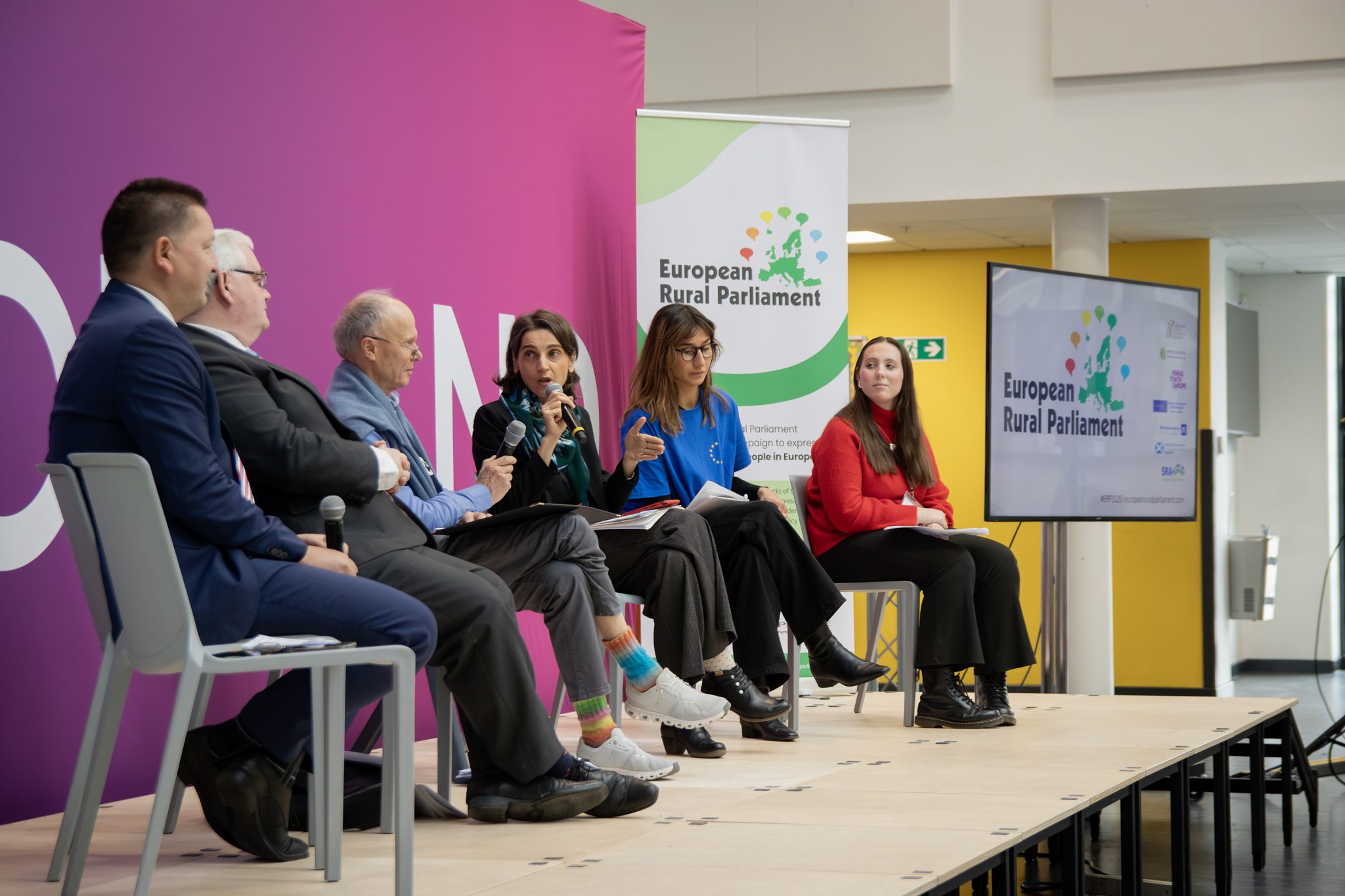
3. PANEL HOW CAN WE ORGANIZE A STRONG AND UNITED RURAL VOICE in cooperation with the Rural Pact?
Vanessa Halhead (ERP), Enrique Nieto (RPSO), Michael Schmitz (CEMR), Lidija Pavić-Rogošić (EESC). Some quotes:
Vanessa: we’re all here for the same purpose, which is rural development to support rural communities. It’s quite clear that the rural pact is a tool from the LTVRA which is a fantastic idea. The ERP is much more from the bottom up. The membership is huge. We have 70 national or federal countries, federal organisations, civil society. We can provide a voice from the very bottom of that. The national bodies are very connected, from the grassroots right the way up to the national level. We have this incredible networking structure through which we can operate. How could the world not use that?
Enrique: In the Rural Pact we try to create a space for the stakeholders from local communities to civil society organisations, research, businesses, citizens, planning authorities, etc. to talk to each other, to learn from each other, to connect. With the support of the European Commission, we work from an EU level project. It required a bit of time to get this approach closer at national level. For the second time we work with the presidency of the council to implement a high-level policy forum in Ireland in November. We have 4004 mandates registered. Many of them represent organizations, organisations like yours. The position of the Rural Pact is to try to amplify the voice of rural people. We did a lot of work, but there is much more to do. A question: there is a UN charter for peasant workers. Should we be thinking about a Charter for Rurality? A charter of rights and responsibilities, we put that into an opinion a few years ago, but it never developed. ERP and Rural Pact could cooperate more, for instance in the role that ERP can play at national level.
Michael The Rural Pact is helpful to amplify the impact of the long-term vision. But several (agricultural) industries ask me, “what does this mean exactly for us?” As many other EU-strategies like the Right to Stay, if you go into detail, there is a lot of unclarity about the implementation, the funding etc. The partnership principle is most crucial, but our ministries will only act when the impact is clear. There’s a European call of conduct, but it is not managed. We are always too late, when it depends on the member states.
Lidija: EESC supports and believes in the Long-Term Vision. It has been a year now that a Memorandum of Understanding was signed between EESC and ERP as strategic partners. We are a European institution advisory, don’t have the power to decide, but we can advise Council, Parliament and Commission. We seek to cooperate with different institutions, and European Rural Parliament is definitely a strategic partner. We ask for structural participation of rural communities and civil society, including youth and other organisations, and we believe in concrete co-creation in preparing opinions. Now we are working on an opinion on Rural Proofing, to be published in September.
4. GROUP DISCUSSIONS/ PANEL: WHAT CAN ERP CONTRIBUTE TO A STRONG RURAL VOICE?
- Group 1 Right to Stay (Adriana) What does the Right to Stay mean for rural areas and civil society? What can Civil Society and ERP contribute to a strong rural voice in the Right to Stay-strategy?
- Group 2 Rural voice in the MFF-period. (Tom) What can Civil Society and ERP contribute to a strong rural voice?
- Group 3 The Partnership-principle (Goran) What can Civil Society and ERP contribute to a strong rural voice in the National Regional Partnership Plans? How to engage National Rural Parliaments.
- Group 4 New ERP partners (Miki) Building alliances between ERP and other relevant bodies?
Discussion highlights:
- Huge variation across Member States in how seriously the partnership principle is applied.
- Civil society often lacks resources, capacity, and formal recognition.
- Need for:
- Earlier involvement in NRPP drafting.
- Stronger national rural structures (rural parliaments, networks).
- Making partnership mandatory and accountable, not voluntary.
- Better use of LEADER/CLLD as a proven participatory platform.
Across groups, participants stressed:
- ERP must professionalise, strengthen internal coordination, and improve transparency.
- Need for continuous engagement, not only every 2–3 years.
- Stronger alliances with:
- National rural parliaments
- CAP networks
- Youth organisations
- Sectoral rural actors (farmers, SMEs, social economy)
- ERP outputs (declarations, manifestos) must be more systematically fed into EU processes.
Participants described new pressures on rural communities:
- Migration and demographic change reshaping village life.
- Declining volunteerism and ageing populations.
- Fragmentation of community identity.
- Need for local economic literacy to help communities understand their assets and opportunities.
- CLOSING REFLECTIONS
Edina Ocsko (key listener): The EU framework is somehow set in terms of the regulation, but this framework is relatively soft. Although we there are commitments and there is the 10% Rural Target and so on, at the end of the day, it leaves huge load of flexibility to member states. With the Rural Pact Coordination Group we were fighting to have more requirements, but we were not so successful in that, because I think it remains soft. The RPCG is being stopped, and the other tools remain soft. We need an integrated approach like in Ireland. As to civil society, there are a lot of networks on European and regional level. How to unite these voices, that remains a question? The Partnership Principle is happening on several levels, but it is not really safeguarded. We have to put more efforts in the member states, because for instance the successful Leader-approach is not safeguarded in the NRPP’s. Key words came up: youth and the engagement of young people and intergenerational exchange. Also interest in the real local level is raised, and the data we use. Sustainability and resilience issues were not fully covered today but remain important.
Tom: we have the basics of what is needed, already a long time like Leader, cohesion policy and learning from each other. The ERP remains a unique bottom‑up movement but must evolve to stay influential. EU institutions (DG AGRI, DG REGIO, CAP Network, Committee of the Regions, EESC) expressed willingness to deepen cooperation. We have a shared ambition: to ensure rural communities can shape the policies that shape their lives. So thanks to the support of Scottish Government, Scotland House, the speakers and moderators and Ben for the coordination.
We have all different responsibilities, but today we had the same vision. Let’s grow our collaboration.
Participants list
| Last name | First name | Organisation |
| Borsellino | Adriana | RYE |
| Brown | Elidh | Moray Local Action Group (CLLD Scotland) |
| Chauvin | Adélie | Euromontana |
| Budzich | Urszula | RPSO |
| Essen | Ben van | ERCA, Rural Pact Coordination Group |
| Federwish | Tobias | VillageMovement Brandenburg |
| Fingland | Chiara | Scottish Rural Action |
| Grieve | John | Scottish Rural Action |
| Grogans | Brian | Head of the Rural Policy Unit, Scottish Government |
| Halhead | Vanessa | ERCA |
| Hof | Philip | Gouvernement of Wales |
| Jones | Tom | ERCA |
| Karanika | Katerina | RYE |
| Lambert | Marie | DG AGRI |
| Makrandreou | Maria-Christina | AGRI B3 |
| Matavulj | Miodrag | PREPARE |
| Minnaert | William | Village Movement Flanders |
| Moise | Stefania | Policy Advisor to Maria Walsh MEP |
| Morrison | Theona | Scottish Rural Action |
| Moxom | Jeffrey | Euromontana |
| Nanni | Silvia | DG AGRI |
| Nieto | Enrique | AEIDL and Rural Pact Support Office |
| Ocsko | Edina | Smart Villages Network, Rural Pact Coordination Group |
| Pavić-Rogošić | Lidija | EESC |
| Pazos Vidal | Serafin | AEIDL |
| Prior | Alistair | European CAP Network |
| Quinn | Sinead Quinn | Irish Presidency DRCDG |
| Rivas Garcia | Lucía | Oficina de la eurodiputada Rosa SERRANO SIERRA |
| Rouby | Alexia | DG AGRI |
| Schmitz | Michael | Landkreistag and Rural Pact Coordination Group |
| Šoster’ | Goran | ELARD |
| Zonta | Diletta | DG Regio Team Leader Right to Stay |
Plus online participants.